
» Building Solutions
Humanitarian Camps and Refugee Shelters
Nuriş Prefabrik designs, manufactures and installs prefabricated camp infrastructure for humanitarian response: family shelters, ablution units, health clinics, schools, warehouses and administration buildings. Units are produced at our facility in Başkent OSB, Ankara, Türkiye, and shipped flat-packed or as ready-to-use volumetric modules.
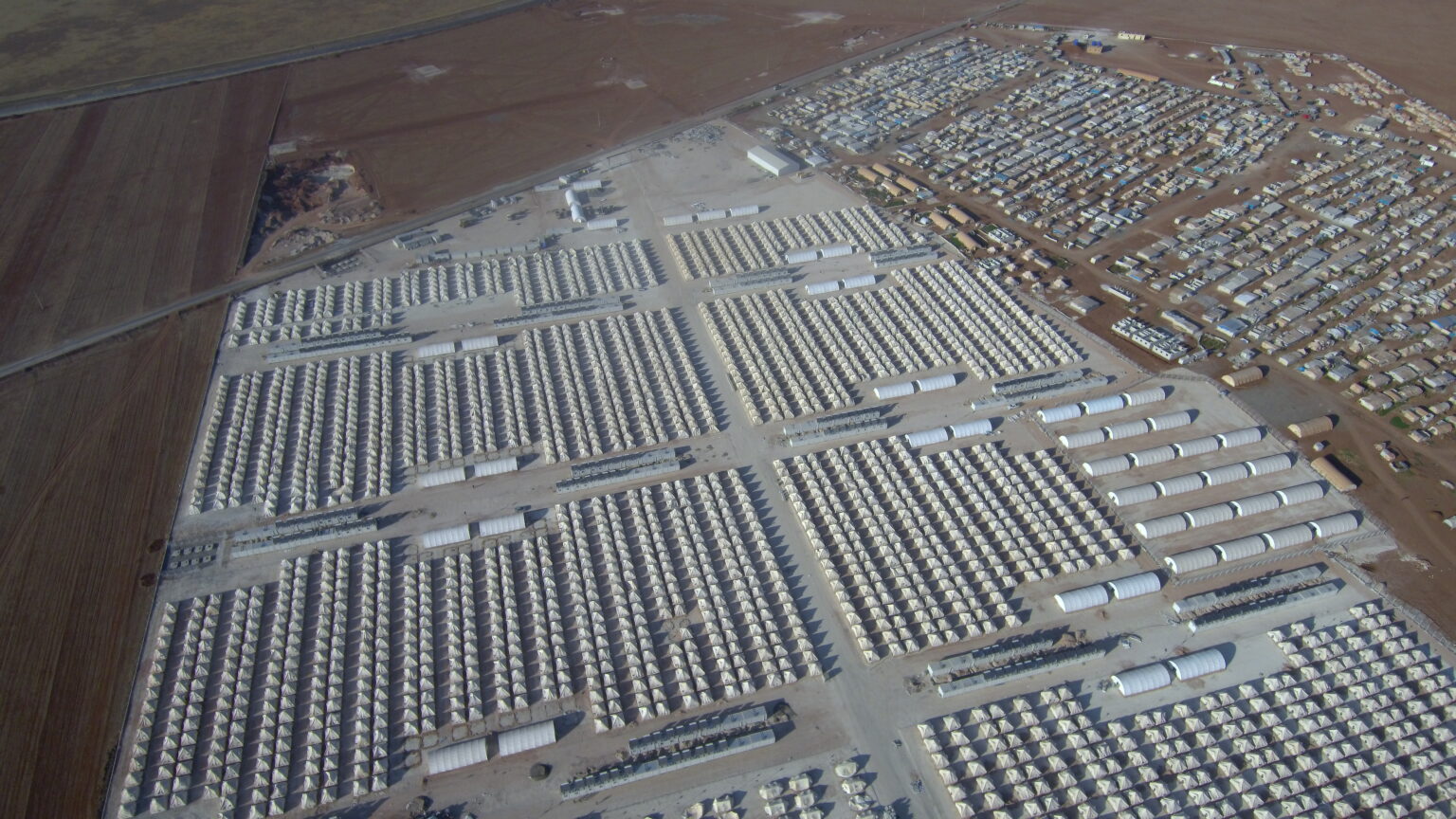
Response in three stages
Ready-to-use volumetric units cover the first days: they arrive complete and are connected on site. Flat-pack containers follow for mass deployment, with compact shipping and fast assembly. Permanent housing and community buildings support recovery: village houses, schools and social facilities in prefabricated and light steel systems.
Camp components
- Family shelters and living containers
- WASH facilities: ablution blocks, toilets and showers, laundry
- Health posts, clinics and hospitals
- Schools and child-friendly spaces
- Community buildings, mosques and prayer rooms
- Warehouses for food and non-food items
- Administration, coordination and security buildings
Delivered projects
- Gaziantep Nizip refugee camp: about 15,000 people, completed in 45 days, with a security building, light steel schools, social facilities, a mosque and storage.
- Zugara Jarablus camp, Syria: about 22,500 people on 260,000 m², delivered in 60 days.
- Elazığ earthquake container city: about 10,000 people on 80,000 m² in 45 days, organised by AFAD after the 2020 earthquake, with social facilities, a mosque, a health centre, parks and sports areas.
- Çobanbey hospital, Syria: about 21,000 m² enclosed area, 200 beds, completed turnkey in about six months.
See also emergency housing and healthcare buildings.
Frequently asked questions about humanitarian camps
How long does it take to build a refugee camp with prefabricated units?
It depends on capacity, unit type and logistics. Nuriş Prefabrik completed the Gaziantep Nizip camp for about 15,000 people in 45 days, the Elazığ earthquake container city for about 10,000 people in 45 days, and the Zugara Jarablus camp in Syria for about 22,500 people in 60 days.
What buildings does a refugee camp need besides shelters?
A functioning camp also needs WASH facilities (toilets, showers, laundry), health posts, schools, places of worship, community buildings, warehouses and administration and security buildings. The Nizip camp included a security building, light steel school buildings, social facilities, a mosque and storage buildings.
What is the difference between flat-pack and volumetric containers for emergency shelter?
Flat-pack containers are shipped as panels and frames, so several units fit in one truck and are assembled on site, which suits mass deployment over long distances. Volumetric units arrive complete and are ready on the first day but take more transport space.
Can prefabricated camps be planned to Sphere standards?
Camp layouts can be planned according to the Sphere Handbook minimum standards for shelter, settlement and WASH, based on the requirements of the client agency.
Can a prefabricated hospital be built in a crisis area?
Yes. Nuriş Prefabrik built the Çobanbey hospital in Syria: about 21,000 m² enclosed area with 200 beds, delivered turnkey with equipment supply, infrastructure and landscaping in about six months.
For tenders and project enquiries, contact us through the contact page.