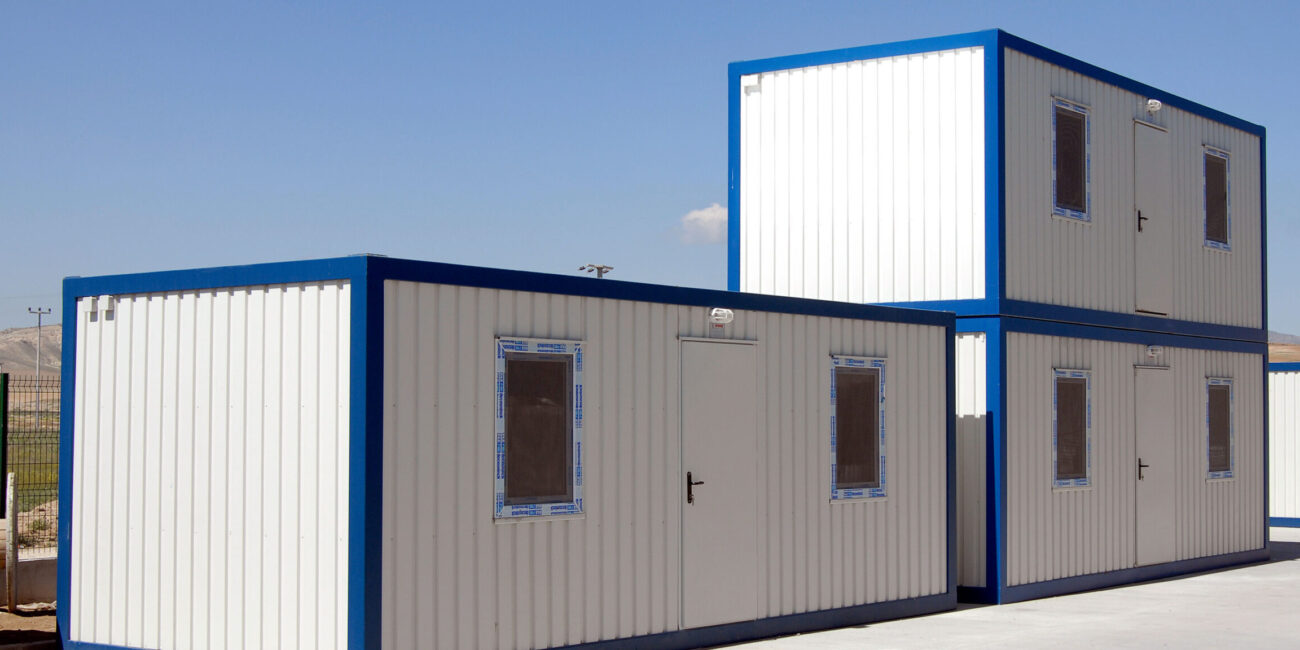
What Are Accommodation Container Buildings?
Accommodation container buildings are fully equipped modular housing systems designed to include essential living spaces such as bedrooms, bathrooms, toilets, kitchens, and living rooms. They can be manufactured as single units or combined into larger modular complexes to meet different project requirements.
Engineered with modern construction technologies, these container homes provide comfortable indoor environments while offering the advantages of rapid production and installation.
Advantages of Accommodation Container Buildings
Accommodation container buildings offer numerous technical and operational advantages, making them an ideal solution for a wide variety of projects.
- Fast manufacturing and rapid installation
- Fully equipped, move-in-ready buildings
- Durable steel frame construction
- Excellent thermal and acoustic insulation
- Long service life with minimal maintenance
- Cost-effective housing solution
- Modular and expandable design
- Suitable for different climate conditions
Thanks to these advantages, accommodation container buildings are not only temporary structures but also reliable long-term housing solutions.
Applications of Accommodation Container Buildings
Accommodation container buildings are versatile modular solutions suitable for many different sectors and industries.
They are commonly used for:
- Disaster relief and emergency housing
- Construction site accommodation
- Temporary and permanent housing projects
- Social housing developments
- Camps and remote site facilities
- Government and municipal projects
- Military facilities and special-purpose projects
Depending on project requirements, accommodation container buildings can be designed as single-story, multi-story, or combined modular container systems.
Comfortable and Secure Living Spaces
Accommodation container buildings are designed not only to provide shelter but also to create comfortable, healthy, and secure living environments. High-performance insulated wall and roof panels, together with premium-quality doors and windows, ensure year-round comfort and energy efficiency.
Their robust steel structural system enhances safety while delivering a durable solution for long-term use.
Energy-Efficient and Sustainable Housing Solutions
Accommodation container buildings are equipped with advanced insulation systems that help reduce heating and cooling costs by improving energy efficiency. This results in sustainable, environmentally responsible, and cost-effective modular housing solutions.
In addition, the recyclable steel components used throughout the construction process make these buildings an environmentally friendly alternative within the modern construction industry.
Accommodation Container Buildings vs. Prefabricated Houses
While prefabricated houses are generally preferred for larger residential developments, accommodation container buildings provide more compact, flexible, and modular solutions.
Their rapid installation, portability, and adaptability make them the preferred choice for construction sites, emergency housing, industrial projects, and temporary accommodation facilities.
The most suitable building solution can be selected according to the project’s duration, budget, operational requirements, and intended use.
Why Choose Nuriş Prefabrik Accommodation Container Buildings?
With decades of experience in modular construction, Nuriş Prefabrik manages every stage of accommodation container building projects—from engineering and design to manufacturing, installation, and turnkey delivery.
Supported by advanced manufacturing facilities, experienced engineers, and extensive field expertise, we deliver safe, durable, and customized modular container solutions tailored to every project.
Our functional, comfortable, and long-lasting accommodation container buildings are trusted for government, industrial, humanitarian, commercial, and social infrastructure projects throughout Turkey and international markets.