
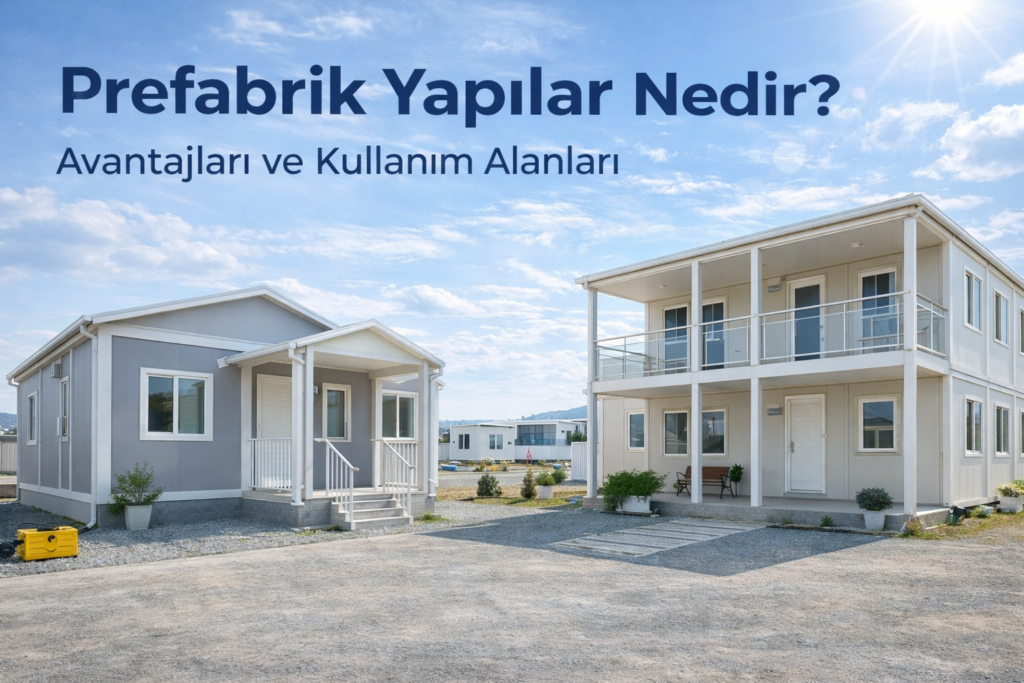
Modern Construction Solutions for Speed, Efficiency & Sustainability
As the construction industry continues to prioritize speed, cost-efficiency, and sustainability, Prefabricated Buildings have become one of the most preferred building systems for modern projects. Manufactured in a controlled factory environment and assembled on-site within a short period, prefabricated structures provide efficient solutions for both temporary and permanent applications.
In this article, you’ll discover what prefabricated buildings are, their key advantages, and where they are commonly used.
What Are Prefabricated Buildings?
Prefabricated Buildings are industrialized construction systems in which structural components—such as walls, roofs, and floor panels—are manufactured in a factory and transported to the project site for final assembly. Unlike conventional reinforced concrete construction, prefabricated buildings are produced under controlled manufacturing conditions, ensuring consistent quality and compliance with international standards.
This production method significantly reduces construction time while minimizing on-site labor requirements and improving overall project efficiency.
Advantages of Prefabricated Buildings
Prefabricated buildings offer numerous advantages, making them a preferred choice for both public and private sector projects.
Rapid Manufacturing & Installation
Since building components are manufactured in advance, construction time on-site is dramatically reduced. Depending on the project size, prefabricated buildings can be completed and ready for use within days or weeks.
Cost-Effective Construction
Factory-controlled production minimizes material waste and shortens construction schedules, making prefabricated buildings a more economical alternative to conventional reinforced concrete structures.
Durable & Safe Building Systems
Modern prefabricated buildings are engineered to withstand earthquakes, strong winds, and harsh weather conditions. Supported by advanced structural engineering, they provide reliable, safe, and long-lasting performance.
Energy Efficiency
Designed to accommodate high-performance thermal and acoustic insulation systems, prefabricated buildings improve energy efficiency while creating comfortable indoor environments throughout the year.
Flexible & Modular Design
Their modular construction allows buildings to be expanded, relocated, or reconfigured according to changing operational requirements, providing exceptional flexibility and long-term usability.
Where Are Prefabricated Buildings Used?
Thanks to their versatility, prefabricated building systems are used across a wide range of industries and applications.
Residential & Living Spaces
- Prefabricated Homes
- Affordable Housing Projects
- Temporary Residential Communities
Construction Sites & Industrial Facilities
- Site Offices
- Worker Accommodation Buildings
- Dining Halls & Cafeterias
- Warehouses & Technical Buildings
Healthcare & Educational Facilities
- Schools & Classroom Buildings
- Healthcare Centers
- Emergency Response Facilities
Office & Commercial Buildings
- Sales Offices
- Administrative Buildings
- Security & Reception Buildings
Disaster Relief & Public Projects
- Post-Disaster Housing
- Temporary Shelter Facilities
- Government & Public Infrastructure Projects
Prefabricated Buildings vs. Reinforced Concrete Construction
Compared with conventional reinforced concrete construction, Prefabricated Buildings can be completed much faster while offering significant cost advantages. Factory-controlled manufacturing ensures higher production quality and greater consistency, eliminating lengthy formwork and concrete curing processes that typically extend construction schedules.
For projects where speed, efficiency, and quality are essential, prefabricated construction offers a highly effective solution.
A Sustainable & Modern Construction Solution
Prefabricated buildings are recognized as environmentally responsible construction systems thanks to their use of recyclable materials, optimized manufacturing processes, and energy-efficient designs. Their compatibility with modern architectural concepts also allows them to meet both functional and aesthetic expectations.
The Future of Construction: Prefabricated Buildings
As urbanization accelerates and the demand for resilient, sustainable, and cost-effective construction continues to grow, Prefabricated Buildings are becoming one of the defining building technologies of the future.
Their ability to deliver fast construction, structural reliability, architectural flexibility, and long-term performance makes prefabricated building systems an increasingly valuable solution for residential, commercial, industrial, and public-sector projects worldwide. By combining advanced engineering with modern manufacturing technologies, prefabricated buildings continue to shape the future of the global construction industry.