
Residential Buildings
Prefabricated Residential Buildings
Prefabricated Residential Buildings are modern housing solutions that combine rapid construction, cost efficiency, and superior structural safety. Manufactured under controlled factory conditions, these homes are assembled on-site within a short period, providing comfortable, durable, and move-in-ready living spaces.
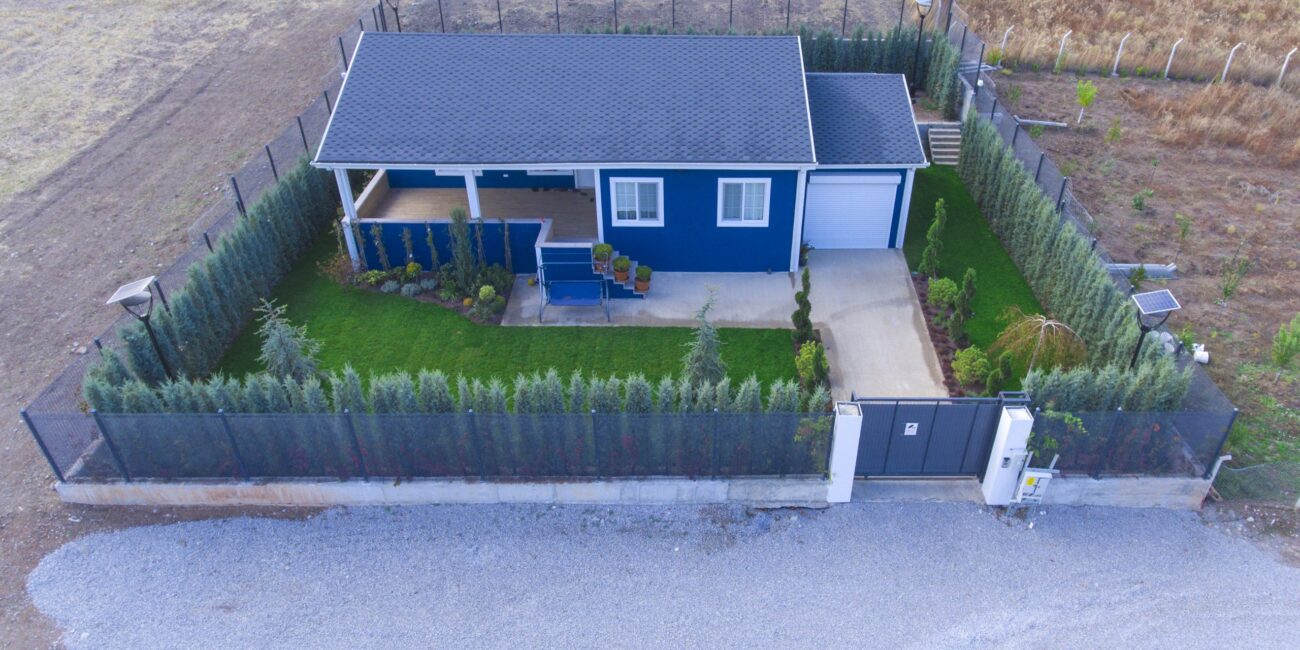
Modern Housing Solutions with Prefabricated Construction
Prefabricated residential buildings combine the advantages of modern construction technology, offering faster project completion, enhanced structural safety, and optimized construction costs. Manufactured in a controlled factory environment and assembled on-site, these buildings are widely preferred for both private residences and large-scale housing developments.
Today, prefabricated housing is no longer considered a temporary solution. Instead, it provides permanent, sustainable, and high-quality living spaces designed to meet modern residential standards.
What Are Prefabricated Residential Buildings?
A Prefabricated Residential Building is a modular housing system in which wall panels, roof systems, floor components, and structural elements are manufactured in a factory and assembled at the project site.
Factory-controlled production ensures consistent quality while significantly reducing construction time and minimizing on-site labor requirements.
Designed using advanced engineering principles, prefabricated homes provide reliable protection against earthquakes and harsh environmental conditions while maintaining excellent structural performance.
Advantages of Prefabricated Residential Buildings
Prefabricated homes offer numerous technical and practical advantages, including:
- Rapid manufacturing and installation
- Cost-effective housing solutions
- Earthquake-resistant structural systems
- Superior thermal and acoustic insulation
- Durable, long-lasting building components
- Low maintenance requirements
- Modular and expandable designs
- Modern architectural aesthetics
These advantages make prefabricated residential buildings an attractive investment for both homeowners and property developers.
Applications of Prefabricated Residential Buildings
Prefabricated homes are suitable for a wide variety of residential applications, including:
- Detached Prefabricated Houses
- Residential Housing Developments
- Affordable Housing Projects
- Post-Disaster Housing Solutions
- Rural & Semi-Rural Residential Communities
- Construction Camp Accommodation
Depending on project requirements, prefabricated homes can be designed as single-story or multi-story buildings.
Safe & Durable Prefabricated Housing Systems
Modern prefabricated residential buildings are constructed using galvanized steel structural systems, insulated wall panels, and durable roofing solutions.
These advanced building technologies provide excellent resistance against earthquakes, strong winds, and challenging climatic conditions, ensuring safe and reliable long-term performance.
Combined with advanced engineering calculations and premium-quality materials, prefabricated homes are designed to provide decades of trouble-free use.
Energy-Efficient & Comfortable Living Spaces
Prefabricated residential buildings are equipped with high-performance thermal and acoustic insulation systems that create comfortable indoor environments throughout the year.
By minimizing heat loss and improving overall energy efficiency, these buildings significantly reduce heating and cooling costs while contributing to sustainable residential construction.
Prefabricated Homes vs. Conventional Concrete Buildings
Compared with traditional reinforced concrete construction, prefabricated homes can be completed in a significantly shorter period. Since factory-manufactured building components eliminate lengthy formwork and concrete curing processes, project delivery is greatly accelerated.
Additionally, factory-controlled manufacturing ensures consistently high production quality, while the lighter structural weight improves seismic performance and overall structural efficiency.
The Importance of Engineering & Quality in Prefabricated Housing
Structural engineering plays a critical role in the safety and long-term performance of prefabricated residential buildings.
Accurate structural calculations, high-quality materials, and strict compliance with international construction standards directly influence the durability and service life of every building.
For this reason, prefabricated housing projects should always be designed and constructed by experienced engineering professionals.
Why Choose Nuriş Prefabrik Prefabricated Residential Buildings?
At Nuriş Prefabrik, we manage every stage of your residential project—from architectural design and structural engineering to manufacturing, on-site installation, and turnkey delivery—with a fully integrated project management approach.
Backed by our advanced production facilities, experienced engineering team, and more than 50 years of manufacturing expertise, we deliver safe, durable, energy-efficient, and customized prefabricated housing solutions tailored to the unique requirements of every client.
With our commitment to quality, safety, comfort, and sustainability, Nuriş Prefabrik continues to be a trusted partner for homeowners, developers, public institutions, and international residential projects seeking modern, long-lasting housing solutions.
İçerik