
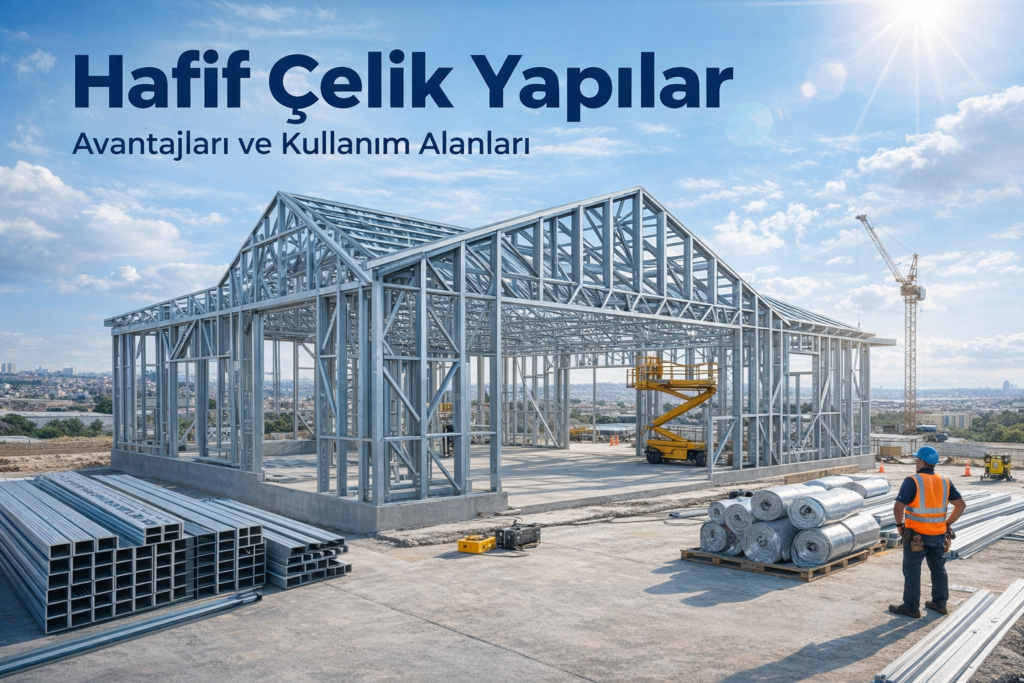
Modern construction projects increasingly demand building solutions that are fast, durable, and sustainable. Meeting these expectations through advanced engineering and innovative construction technologies, Light Steel Buildings have become one of the most widely preferred structural systems for both residential and industrial developments. Offering exceptional load-bearing capacity, rapid installation, and long-term durability, light steel construction provides a highly efficient alternative to conventional reinforced concrete buildings.
What Are Light Steel Buildings?
Light Steel Buildings are modern construction systems manufactured using galvanized steel profiles that are precision-engineered in a factory environment and assembled on-site. The galvanized steel members used in these systems provide outstanding structural strength, corrosion resistance, and long-lasting performance, ensuring reliable service for decades.
Designed with flexibility in mind, light steel building systems can be customized to meet the specific requirements of each project while significantly reducing construction time.
Advantages of Light Steel Buildings
Light steel construction offers numerous technical and operational benefits that make it one of the most efficient building systems available today.
Rapid Manufacturing & Installation
Since structural components are manufactured under controlled factory conditions, production is highly efficient and installation on-site is significantly faster than conventional reinforced concrete construction. This accelerated process shortens project timelines and enables earlier occupancy.
Superior Strength & Earthquake Resistance
The inherent flexibility of light steel structures allows them to absorb seismic forces more effectively, providing excellent earthquake performance. This makes them particularly suitable for regions with high seismic activity.
Long Service Life & Low Maintenance
Galvanized steel framing systems offer exceptional resistance to corrosion and environmental conditions, resulting in durable buildings that require minimal maintenance throughout their lifespan.
Energy Efficiency
Light steel buildings are fully compatible with high-performance thermal and acoustic insulation systems, reducing energy consumption while providing comfortable indoor environments throughout the year.
Environmentally Friendly Construction
Steel is a fully recyclable construction material, making light steel buildings an environmentally responsible choice that supports sustainable construction practices and reduces environmental impact.
Where Are Light Steel Buildings Used?
Thanks to their versatility and flexibility, light steel building systems are suitable for a wide variety of applications, including:
- Detached Houses & Villas
- Affordable Housing Developments
- Prefabricated Buildings
- Construction Site Facilities & Temporary Buildings
- Office Buildings
- Educational & Healthcare Facilities
- Warehouses & Industrial Buildings
Through project-specific engineering and customized design, light steel structures can be tailored to meet virtually any architectural or operational requirement.
Light Steel Buildings vs. Reinforced Concrete Construction
Compared with conventional reinforced concrete buildings, Light Steel Buildings are lighter, more flexible, and significantly faster to construct. Factory-manufactured structural components minimize on-site errors while eliminating lengthy formwork and concrete curing processes typically associated with traditional construction.
As a result, light steel construction offers substantial advantages in terms of construction speed, cost efficiency, structural performance, and sustainability.
The Importance of Quality in Light Steel Building Systems
The long-term performance of a light steel building depends on the quality of its materials, precision manufacturing processes, and engineering design. Properly engineered light steel structures provide exceptional safety, architectural flexibility, and long-lasting durability.
For this reason, every stage of the project—from design and manufacturing to installation—should be managed by experienced professionals using internationally recognized engineering standards and quality control procedures.
The Future of Construction: Light Steel Buildings
As urbanization accelerates and the demand for sustainable, resilient, and energy-efficient buildings continues to grow, Light Steel Buildings are becoming one of the defining construction technologies of the future.
Combining modern architectural design with advanced engineering, rapid construction, and outstanding structural performance, light steel systems continue to play an increasingly important role in residential, commercial, industrial, and institutional projects worldwide. With their flexibility, durability, and sustainability, they represent a smart investment for the future of modern construction.